Your Cart is Empty

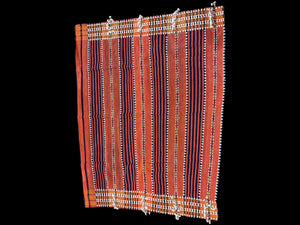
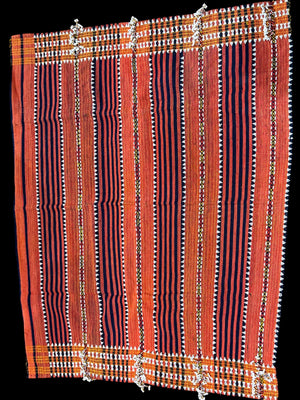
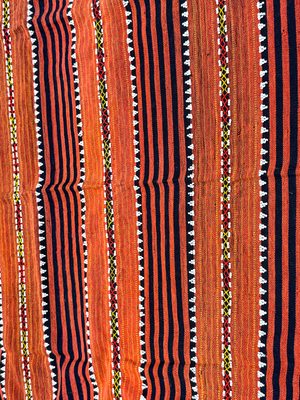
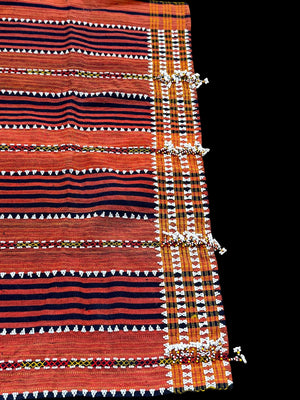
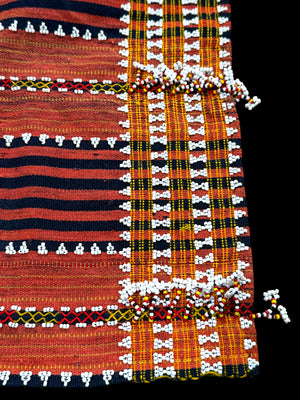
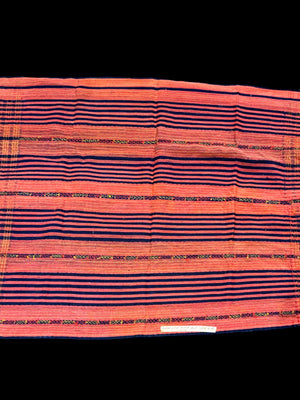
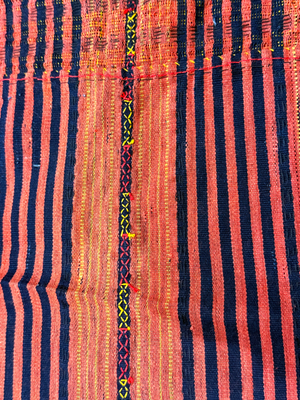
Ehoh-Loho Akin - a rare example of a vintage, handwoven and beaded ceremonial wrap skirt from the Gaddang (Ga'dang) people of the Cordillera region of northern Luzon, Philippines. Mid to late 20th century. Cotton and glass beading. A colour palate of indigo blue/black, deep madder red and lighter red stripes with yellow detailing, handwoven on a back strap loom in a single piece that incorporates beads in a technique known as bead-inclusion weaving(locally known as manu'bak), finished with hand stitching.
The akin (aken) or wrap skirt is a highly prized handwoven textile. Authentic pieces such as this one are exceptionally rare and are treated as wearable art due to their distinctive heavy beadwork and extremely complex woven patterns. In this case, a Gaddang master weaver threads individual bukat beads directly onto the warp (lengthwise) or weft (crosswise) threads row by rowasthe fabric is built.
These wrap skirts are traditionally secured at the waist with a thick, heavily beaded belt called a bakwat.
Purchased in Baguio, Philippines in the year 2000 as part of a larger collection of traditional woven Gaddang textiles, this museum-quality piece was in fact housed for the majority of the year in a local museum and was loaned to locals on ceremonial occasions.
Measurements:79 cm x 59 cm
For a detailed discussion of the Gaddang people and their way of life please visit Yodisphere and their excellent article The Gaddang Tribe of the Philippines: History, Culture, Customs and Tradition, Arts & Crafts
 Photo credit:SIL International


